The Art & Hydrodynamics of Wooden Surfboard Shaping
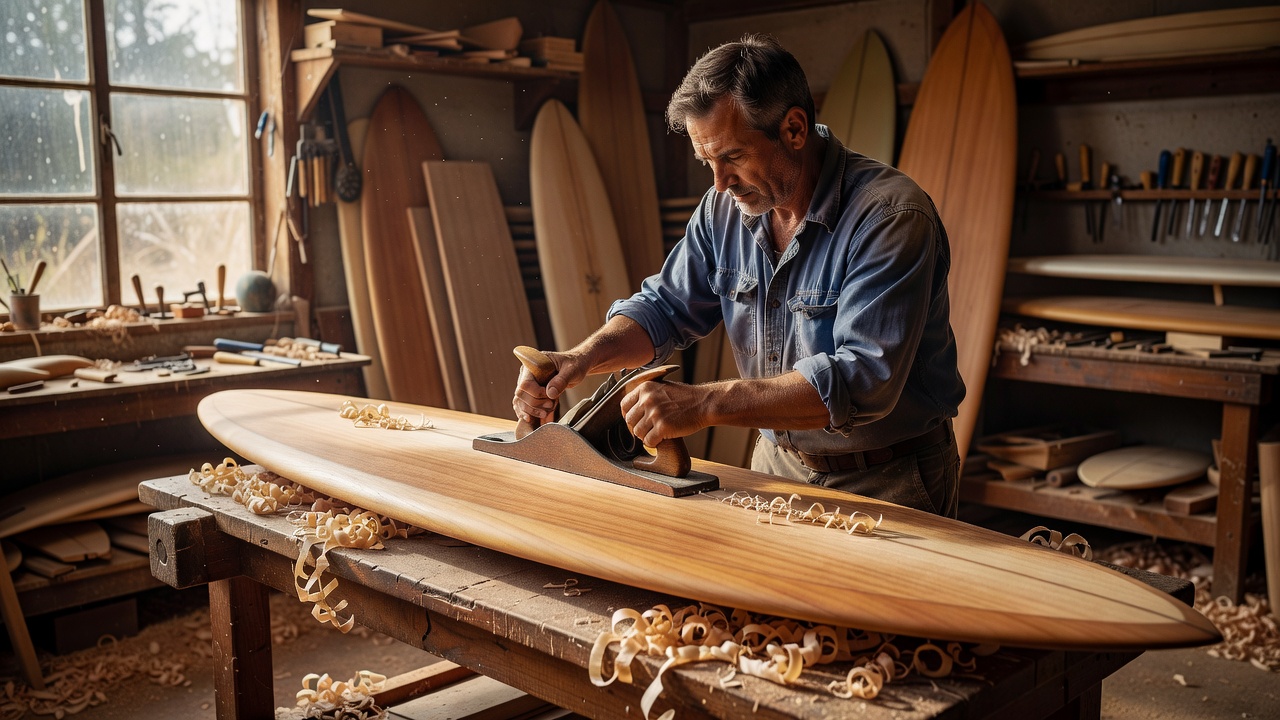
Long before petroleum-based polyurethane and expanded polystyrene dominated global board manufacturing, surfing was defined by hand-carved solid timber planks known as Alaïas and Olo boards in ancient Hawaii. Today, a sustainable renaissance is reviving wood board craft.
1. Paulownia vs. Balsa Wood Dynamics
Modern eco-shapers rely heavily on Paulownia wood—a fast-growing timber species renowned for its incredible strength-to-weight ratio and natural resistance to salt water absorption. Balsa wood offers supreme lightness, making it an ideal choice for internal ribbing and stringer reinforcements.
2. Hollow-Frame Construction
Instead of carving heavy solid logs, master shapers now utilize laser-cut hollow rib structures overlaid with 6mm timber skins. This technique reduces total board weight to match standard foam construction while retaining the natural dampening feel that wood provides in turbulent chop.
3. Rail Hydrodynamics
The shaping process requires precise hand-planing to establish rail curves. Soft round rails in the nose allow smooth water entry, transitioning into hard knife-edge release tails that allow the board to cut sharp turns without losing drive.
Key Shaper Insight
"Wood possesses an innate flex memory. Unlike synthetic foam which degrades under repeated stress, a well-glassed timber board maintains its spring and responsiveness for decades."